
About Bhutan
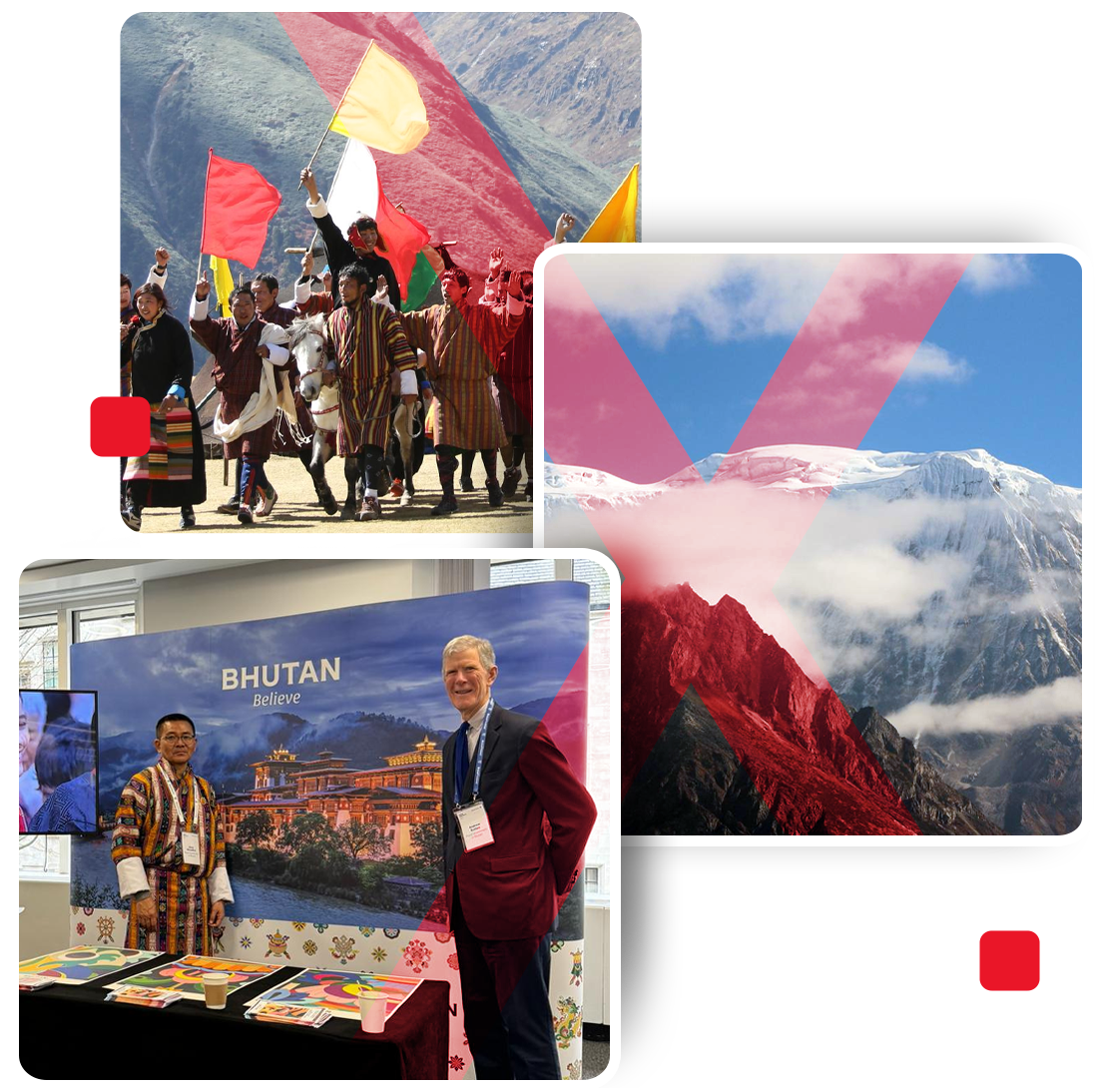
Bhutan: The Land of the Thunder Dragon
Bhutan, often called the Land of the Thunder Dragon, is a kingdom where culture is not only preserved but lived every day. Perched high in the eastern Himalayas between India and China, it is one of the world’s few carbon-negative countries, with over 70% of its land covered by forests and protected landscapes. The country’s rugged mountains, deep valleys, and pristine rivers create a natural beauty that feels both majestic and serene.
What sets Bhutan apart is its guiding philosophy of Gross National Happiness (GNH), which places spiritual, cultural, and environmental well-being above purely economic growth. Visitors sense this philosophy in the unhurried rhythm of life, the reverence for traditions, and the strong connection people maintain with their communities and surroundings.
Today, Bhutan is a democratic constitutional Monarchy that has carefully balanced modern development with cultural preservation. Dzongs, monasteries, and festivals are not merely landmarks but living symbols of heritage, reflecting centuries-old customs that continue to shape daily life. Vibrant festivals bring communities together in music, dance, and ritual, while the prayer flags fluttering across mountain ridges seem to carry the nation’s values across the wind.
Whether drawn by the soaring peaks, the serene valleys, or the warmth of its people, Bhutan leaves an impression that lingers long after you leave—a place where every moment offers a connection to both nature and tradition, and where the richness of life is measured in happiness as much as in experience.